Managing Appreciation in Formal Settings
In refined environments, appreciation is governed less by feeling than by placement.
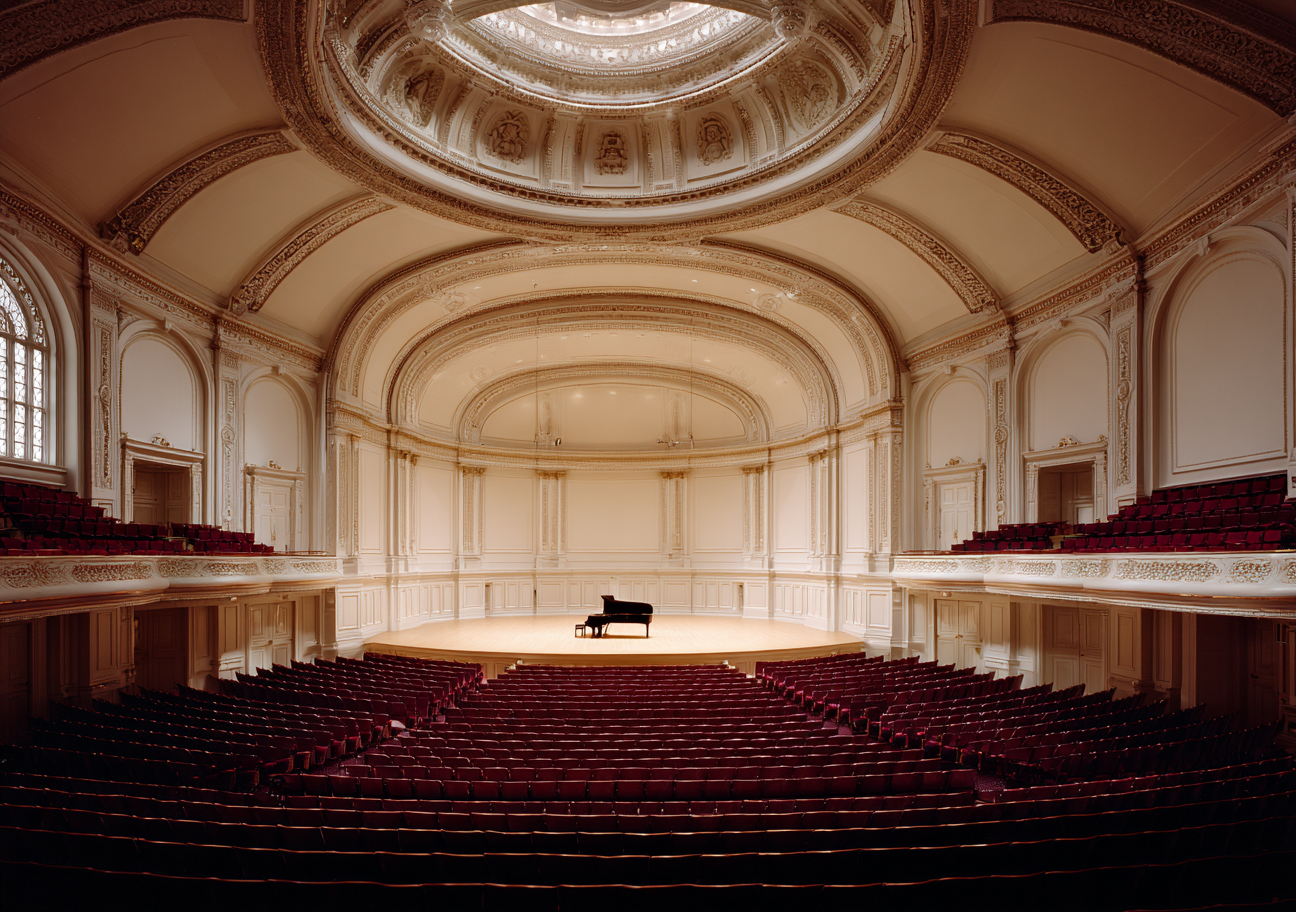
Most regular attendees will have internalized these conventions long before they are articulated.
Still, it is occasionally useful to state them plainly, if only to clarify what is already understood.
In performance settings of any seriousness, appreciation is not an improvisation.
It is understood to have a shape.
Those who attend regularly recognize that response is governed less by feeling than by placement. Emotion may arrive at any moment; acknowledgment does not. The distinction is neither moral nor aesthetic. It is practical.
Appreciation, when correctly expressed, does not interrupt.
I. Timing
During a multi-movement work, the absence of applause between sections is not enforced. It is assumed.
The pause between movements exists to preserve continuity. Sound has receded, but attention remains engaged. The silence is not empty. It is occupied.
Responding audibly at this point rarely enhances the experience. More often, it clarifies that one has mistaken a structural interval for a conclusion.
Those familiar with the form do not experience this as restraint. They experience it as efficiency. Appreciation accumulates more effectively when allowed to remain unexpressed until the work itself has completed its argument.
Silence, in this context, is not passivity.
It is participation without interference.
Immediate response is not condemned. It is simply unnecessary.
The work has not finished speaking.
II. Release
At the conclusion, response is appropriate.
Applause begins as confirmation. It signals that the exchange has occurred, that attention has been given, that completion has been registered. In its initial phase, it communicates clearly and sufficiently.
What follows is optional.
Extended applause, standing ovations, and repeated acknowledgments are largely ceremonial. They persist not because new appreciation is being conveyed, but because stopping feels socially imprecise.
The standing ovation, once a distinct gesture, has become ambient. It no longer indicates exceptional response so much as baseline participation. Remaining on one’s feet communicates little beyond compliance.
This is not a criticism. It is simply how repetition behaves.
When applause extends past its communicative function, it becomes endurance. Those who continue clapping are not expressing additional feeling; they are occupying time until resolution presents itself.
Most attendees recognize when this shift occurs.
They do not necessarily act on it immediately.
III. Containment
In refined environments, the most visible reactions are rarely the most credible.
Overt delight draws focus away from the performance and toward the individual expressing it. Laughter, unless clearly anticipated by the form, reframes the moment. It introduces a competing rhythm that others must accommodate.
For this reason, reaction is often moderated.
This moderation is not emotional distance. It is calibration. Those fluent in these settings experience fully without advertising the experience. The reaction is registered, stabilized, and allowed to remain proportionate.
A controlled expression communicates more than escalation ever could.
There are, on occasion, vocal declarations.
Individuals who insist on calling out approval—most often with a single emphatic word— tend to do so at the moment when sound has already reached saturation. The declaration does not add information; it attempts to anchor it.
This impulse is rarely malicious. It usually arises from certainty rather than excess feeling. The speaker believes the quality of the performance is beyond dispute and wishes to mark that belief audibly.
The effect, however, is inversion.
By naming approval, the caller recenters attention on their judgment rather than the work itself. What was previously shared becomes momentarily individual. The room adjusts.
Such declarations are not corrected.
They are absorbed.
Over time, they are anticipated.
For most attendees, the management of reaction occurs quietly. The face does the work. Posture, stillness, and timing communicate sufficiently. Excess expression introduces friction. It obliges others to accommodate it.
The social cost is not rebuke.
It is distance.
In spaces where appreciation is assumed, restraint preserves distinction.
IV. Departure
Eventually, applause completes its work.
At that point, remaining is no longer expressive. It is administrative.
Those accustomed to these settings do not wait for exhaustion. They recognize when acknowledgment has stabilized and does not require further reinforcement. Leaving becomes appropriate.
The exit is not hurried.
The decision is often made before the applause fully settles. Coats are already accessible. Logistics have been considered. A brief message is sent discreetly.
Timing matters.
Leaving too early suggests impatience. Leaving too late suggests eagerness. The correct moment arrives after appreciation has been clearly registered, but before repetition begins to dilute it.
Movement is unremarkable. There is no conversation. No signaling. The aisle clears smoothly.
Leaving during extended applause carries a known risk.
Occasionally, the performance resumes.
The encore, when it occurs, is not an extension of the original work so much as a courtesy— a final acknowledgment offered after appreciation has already been received. Its appearance is irregular by design.
Those who depart during ovation accept the possibility of missing it.
This acceptance is not indifference. It reflects a prioritization of structure over surprise. The primary exchange has concluded. What follows, while enjoyable, is supplementary.
Remaining solely to avoid absence during an encore often results in prolonged waiting without resolution. The calculus is familiar.
Most experienced attendees make their decision based on the evening already completed, not on the possibility of additional gesture.
When an encore does occur, it is noted later. The absence is neither defended nor regretted. Participation has already been established.
The car arrives as expected.
This coordination is rarely discussed, but widely understood. Smooth departure reflects the same fluency as silence earlier in the evening. Both indicate an understanding of when a gesture has accomplished its purpose.
Those who remain longest are often those most uncertain their presence has been noticed.
The performance does not require additional confirmation.
Attendance has been logged.
Appreciation has been delivered.
Departure completes the exchange.
Filed under: Distinction