When the Hour Slips Out of Hand
Sometimes precision becomes negotiable.
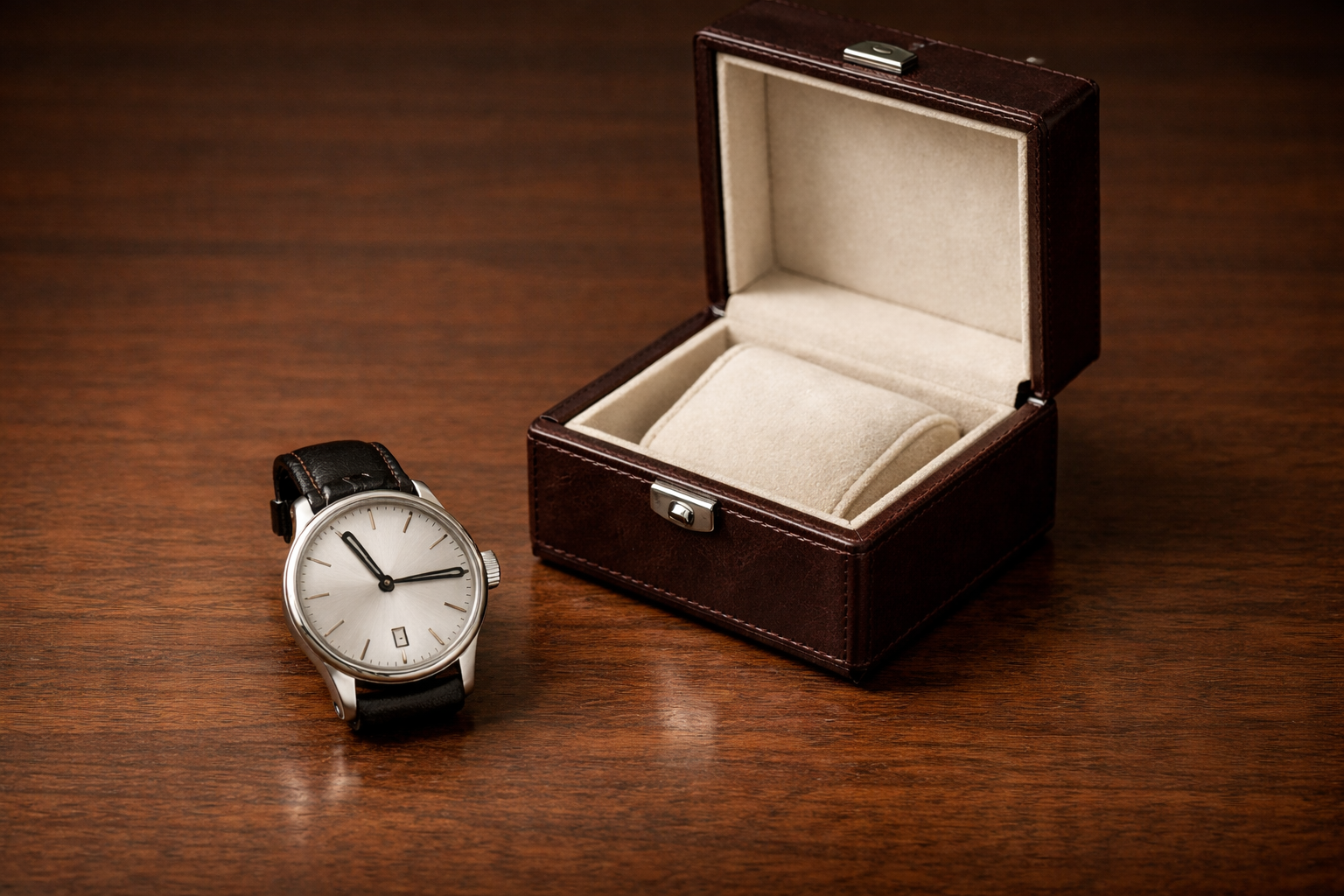
Certain objects are acquired not for their function, but for their fluency.
They are expected to integrate seamlessly into one’s environment, to operate without instruction, and to confirm familiarity with systems that are presumed to be understood. Their presence signals literacy rather than utility.
Occasionally, this presumption encounters resistance.
A timepiece of considerable refinement may require seasonal adjustment. The mechanism exists. The procedure is documented. The expectation is that such matters are self-evident.
And yet, the adjustment remains elusive.
This does not produce frustration so much as hesitation.
Consultation introduces exposure. To ask how to recalibrate the watch would be to acknowledge a gap in understanding that the object itself was meant to conceal.
The watch must therefore remain slightly out of alignment.
Time drifts by an hour.
The discrepancy is noticed privately and absorbed without comment. The object continues to signal mastery even as it resists it.
In some cases, the watch is set aside.
It returns to its box for the duration of the season, its presence temporarily suspended rather than corrected. Its absence is framed as preference rather than inconvenience.
In others, an alternative is introduced.
A second timepiece, already aligned, appears without explanation. The transition is seamless. The environment remains consistent. The difficulty is absorbed through substitution rather than adjustment.
Within affluent environments, ownership often precedes comprehension.
Possession establishes legitimacy, while operation remains optional. The expectation is not that every mechanism will be understood, but that uncertainty will remain unexpressed.
The watch continues to function.
Or another does.
The hour returns in due course.
Mastery, in this context, is less about control than about composure in the presence of minor imprecision.
Alignment is maintained through continuity, not intervention.
Filed under: Distinction