My Wine Cellar Is Too Large to Feel Intimate Anymore
When abundance erodes pleasure.
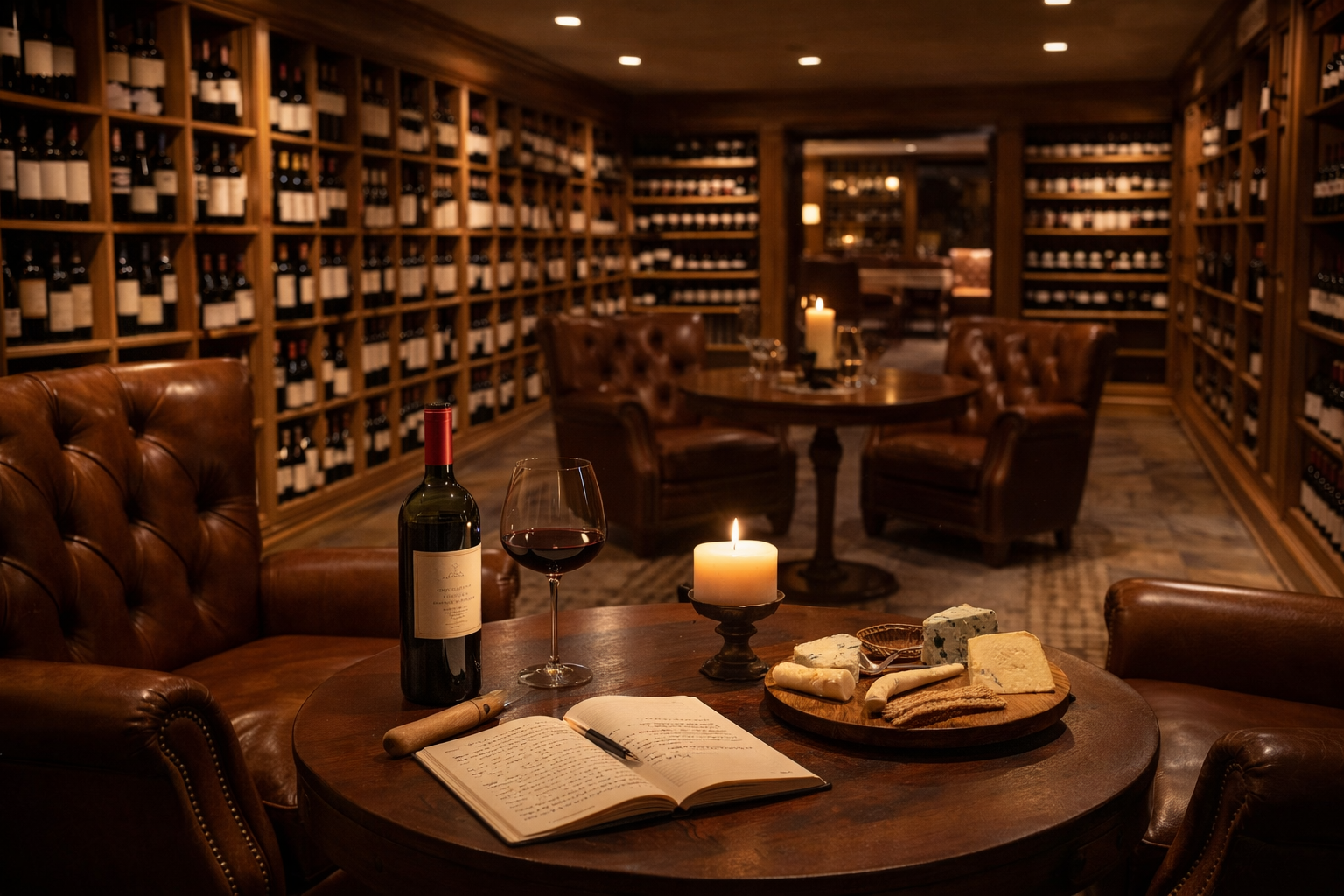
There is a moment in the life of every serious collector when abundance ceases to feel personal.
It does not arrive dramatically. There is no argument, no expense, no crisis.
It arrives one day as a mild recognition: the cellar has become difficult to remember.
Not difficult to manage. Not difficult to maintain.
Difficult to know.
What was once a curated extension of taste has become an archive.
At a certain scale, a wine collection stops feeling like a reflection of the self and begins to resemble an institution.
Early collections are intimate by necessity. Each bottle is selected deliberately. Each case has a story attached to it. The cellar feels less like storage and more like memory.
One knows what is present without consulting a system.
The wines are familiar.
They wait patiently.
Expansion initially feels like progress.
More range. More depth. More security against future scarcity.
But eventually a threshold is crossed.
The number of bottles becomes large enough that familiarity gives way to administration.
At this point, the collector no longer recalls the cellar.
They query it.
Software replaces memory. Inventory replaces intuition. The relationship becomes procedural.
One no longer asks, “What do I feel like opening?”
One asks, “What is appropriate to open?”
The collection shifts from companion to infrastructure.
This is not vulgar accumulation. It is a subtler loss.
The cellar has not grown excessive in size. It has grown impersonal in scale.
There is no longer a sense of presence.
Walking among the racks, one encounters labels rather than relationships.
The bottles are pristine.
They are simply anonymous.
The transformation is clearest when hosting guests.
Once, opening a bottle was an act of expression.
Now it feels like a deployment.
The choice is no longer guided by affection, but by strategy: context, pairing, implied status.
The cellar has become too large to feel like taste.
It feels like capacity.
This is the quiet inversion that afflicts all mature forms of luxury.
What begins as personalization eventually becomes abstraction.
The collector no longer owns the collection.
The collection governs the collector.
Storage requirements dictate architecture. Climate control determines space. Insurance schedules shape expansion.
What was once an extension of identity becomes an external system that must be maintained.
The cellar is no longer a room.
It is a facility.
And like all facilities, it demands neutrality.
No single bottle can matter too much, because there are too many.
Surplus dilutes attachment.
This is the central paradox of cultivated abundance: meaning scales poorly.
The pleasures of ownership are richest when the object can still be held mentally in full.
When one can picture the collection without assistance.
Once the imagination fails, intimacy follows it.
The wines remain excellent.
The experience changes.
The collector begins to feel like a visitor in their own archive.
This is not a tragedy.
It is a structural consequence.
Large systems inevitably replace small relationships.
The cellar has not become worse.
It has become institutional.
And institutions, however refined, are not designed for closeness.
They are designed for permanence.
This is the quiet cost of having more than enough.
Not that the wine is insufficiently fine.
But that there is now too much of it to feel like one’s own.
Filed under: Leisure